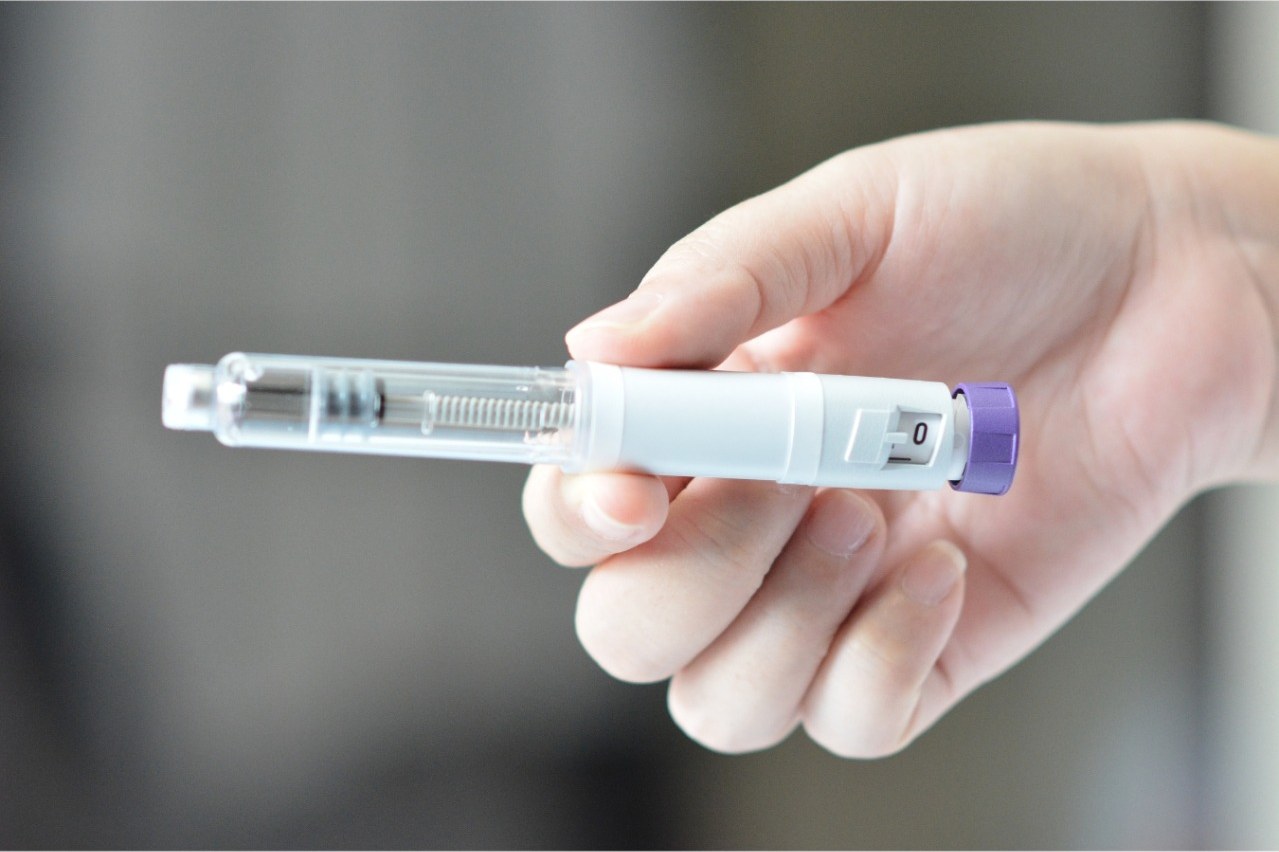
GLP-1s: what they are, and what to consider
There is a lot of attention on social media and the internet around the use of GLP-1s, particularly around how they are considered a "magic pill".
So I wanted to touch on this topic: what they are, and what to consider if you are thinking about taking them.

What are GLP-1s?
GLP-1 is a hormone which is produced by our intestines after we eat a meal, and it does a number of things including telling us we are satiated. What the GLP-1 drugs do is mimic this signalling, however they last a lot longer than the hormone we produce in our body. GLP-1 which is produced in the body has a half-life of 1–2 minutes, whereas the GLP-1 medication has a half-life of around 7 days.
GLP-1 has effects in lots of places in the body which we are understanding more about as research is being done. Some key effects of GLP-1 are:
- Improved blood glucose control
- Impacts appetite regulation, specifically decreasing your appetite
- Delays gastric emptying. It takes food longer to leave your stomach and continue along your digestive tract. As the food is in your stomach for longer, you feel fuller for longer
As a result, they have been shown to cause clinically significant weight loss ranging from 5–18% in trials (Mozaffarian et al. 2025).
The medication
There are a number of medications but some common ones are:
- Semaglutide (Ozempic / Wegovy / Rybelsus)
- Liraglutide (Saxenda)
- Tirzepatide (Mounjaro). This acts on both the GLP-1 and gastric inhibitory polypeptide (GIP) pathway
Most medications are injectable, however there have recently been oral versions of some of the medications approved.
There are also trials being conducted now on a drug called Retatrutide which uses three pathways: GLP-1, GIP, and also glucagon receptor (GCGR). The drug is in phase 3 trials, which is the final stage of human trials.
Should I take GLP-1s for weight loss?
Well, this is a conversation you should have with your GP or healthcare practitioner on whether it is the right treatment for you, however I'll run through some points you may want to think about. Remember that GLP-1s are not meant to be an aesthetic drug. They are a medication to treat Type 2 Diabetes and obesity, which is a chronic disease resulting from complex interactions between many factors (WHO 2025).
Some considerations to think about:
- There are no long term studies. Whilst the class of drugs has been around for 20 years, the recent GLP-1s are new drugs, therefore we don't have long term studies.
- You may not lose weight on the drug (known as a non-responder).
- If you are paying for the treatment privately, it can be costly, especially as you increase the dose.
- The best outcomes when taking GLP-1s is when the treatment is paired with lifestyle changes. Are you ready to make these lifestyle changes?
- In the UK, the drug has a licence for 2 years. Therefore, you need to think long term about what you will do after the 2 years. For example, what lifestyle behaviours can you continue with long-term.
- Do you need psychological support? Body image challenges and disordered eating can come up during treatment, therefore it's important to consider where this support might be accessible.
- There are side effects with taking the drug. The most common ones are nausea, vomiting, constipation, diarrhoea, reflux, bloating and stomach pain. Some less common side effects include pancreatitis, gallbladder and biliary disorders and kidney issues.
- With any form of significant weight loss comes the risk of malnutrition. In particular, muscle and bone density loss.
In summary
If you are considering GLP-1s, go and have a chat with your GP or pharmacist to see if it is the right decision for you.
- NICE guidance on the treatment of overweight and obesity: Overweight and obesity management
- British Dietetic Association leaflet on healthy eating when taking medications for obesity: Medications for obesity
Mozaffarian, D., Agarwal, M., Aggarwal, M., Alexander, L., Apovian, C.M., Bindlish, S., Bonnet, J., Butsch, W.S., Christensen, S., Gianos, E., Gulati, M., Gupta, A., Horn, D., Kane, R.M., Saluja, J., Sannidhi, D., Cody, S.F. and Callahan, E.A. 2025. Nutritional Priorities to Support GLP-1 Therapy for Obesity: A Joint Advisory From the American College of Lifestyle Medicine, the American Society for Nutrition, the Obesity Medicine Association, and the Obesity Society, American Journal of Lifestyle Medicine. doi: 10.1177/15598276251344827.
WHO 2025. Obesity and overweight, World Health Organisation. Accessed 31 July 2026.
Zheng, Z., Zong, Y., Ma, Y., Tian, Y., Pang, Y., Zhang, C. and Gao, J. 2024. Glucagon-like peptide-1 receptor: mechanisms and advances in therapy, Signal Transduction and Targeted Therapy, 9, 234. doi: 10.1038/s41392-024-01931-z.